| 11:15 – 11:25 |
Welcome & Introduction
The Mechatronic Arc: Bridging the Gap Between Physical Design and Computational
Intelligence
|
10 min |
| 11:25 – 12:00 |
F. Masiero (Click to view details)
|
35 min |
Session Overview
This session questions the necessity of complex hardware for perception. On one side, the
Embodied Sensing approach advocates for the integration of dedicated, high-fidelity sensory
hardware—such as distributed tactile surfaces or specialized force/torque sensors—to grant robots
a direct, physical sensitivity to their environment. On the opposing side, the Algorithmic Sensing
perspective champions the use of advanced observers and data-driven techniques to transform the
robot’s existing actuation system into a "virtual sensor." This approach focuses on estimating
external forces and contacts through proprioception and mathematical models, eliminating the need
for additional, often fragile, instrumentation.
Full Perspective (HW & SW)
Federico Masiero
“New Approaches to Magnetic Methods for Robotics”
🕒 30 min + 5 min Q&A
|
| 12:00 – 12:50 |
M. Garabini | M. Saveriano (Click to view details)
|
50 min |
Session Overview
Adaptability to the environment is crucial, but where should it originate? The Passive Compliance
perspective focuses on designing actuation systems with intrinsic elasticity—ranging from soft
fluidic actuators to mechanically variable stiffness mechanisms. In this view, compliance is a
physical property inherent to the device, ensuring passive safety and energy efficiency at the
source. In contrast, the Active Compliance approach (Variable Impedance Control) relies on stiff,
high-bandwidth actuators governed by control loops that simulate virtual springs and dampers,
offering programmable versatility that allows the robot's behavior to be radically altered without
mechanical modification.
Hardware (HW)
Manolo Garabini
“Modular Multimodal Robots: the mechatronics behind the next robot generation”
🕒 20 min + 5 min Q&A
Software (SW)
Matteo Saveriano
“The Role of Energy and Geometry in Contact-Rich Manipulation”
🕒 20 min + 5 min Q&A
|
| 13:00 – 14:00 |
🍽️ Lunch Break & Poster Session |
60 min |
| 14:00 – 14:35 |
R. Kirschner (Click to view details)
|
35 min |
Session Overview
When humans and robots share space, safety is non-negotiable. The Passive Safety perspective
emphasizes intrinsic mechanism design, advocating for lightweight structures, mechanical joint
limits, and impact-mitigating geometries. This philosophy relies on physical constraints to ensure
that injury is physically impossible or drastically mitigated, providing a fail-safe layer that
persists even in the event of a total control failure. Conversely, the Active Safety approach
employs formal methods and real-time algorithmic filters (such as control barrier functions,
reachable set analysis or safety filters). This methodology wraps the system in a "mathematical
safety shield," allowing high-performance hardware to operate aggressively while providing
certifiable guarantees that unsafe states remain unreachable via continuous software monitoring.
Full Perspective (HW & SW)
Robin Kirschner
“Certifiable Safe Human–Robot Interaction Starts with Holistic
Physical Design”
🕒 30 min + 5 min Q&A
|
| 14:35 – 15:10 |
Roundtable Act I (featuring Special Guest Oussama Khatib)
Act I: The Functional Dichotomy - Matter vs. Math
|
35 min |
| 15:10 – 16:00 |
E. Trigili | F. Tessari (Click to view details)
|
50 min |
Session Overview
The final session addresses the ultimate integration: the merging of robotic systems with the
human body. In rehabilitation and assistive robotics, hardware and software must not only coexist
but cooperate intimately with a biological partner, where the human becomes an integral component
of the system dynamics. The Hardware Perspective focuses on the mechatronic design of exoskeletons
and prosthetic devices. It argues that the physical interface—including kinematic compatibility,
back-drivability, compliance, and ergonomic actuation—is a primary determinant of interaction
quality. Here, “intelligence” is embodied in the mechanism’s ability to be transparent or
supportive through its physical structure, providing an intrinsic baseline of safety and usability
even under imperfect control. Conversely, the Software Perspective centers on Human-in-the-Loop
control and intention estimation. This approach tackles the algorithmic challenge of inferring the
user’s intent (via EMG, EEG, or interaction forces) and modulating assistance in real time
(“assistance-as-needed”).
Hardware (HW)
Emilio Trigili
“Engineering human-robot interaction in upper-limb exoskeletons”
🕒 20 min + 5 min Q&A
Software (SW)
Federico Tessari
“Complexity is a Feature, not a Bug: Rethinking Human Coordination for Computationally Intelligent Machines”
🕒 20 min + 5 min Q&A
|
| 16:00 – 16:30 |
☕ Afternoon Coffee Break |
30 min |
| 16:30 – 17:20 |
M. Russo | M. Trumić (Click to view details)
|
50 min |
Session Overview
In high-dimensional robots such as soft robots, the distinction between the "plant" and the
"controller" becomes blurred. The Hardware Perspective focuses on advanced mechatronic
architecture, illustrating how the physical design—including mass distribution, kinematic
structure, actuator placement and mechanical stiffness—fundamentally shapes the robot's
capabilities and pre-defines the solution space for the control problem. Complementing this, the
Software Perspective focuses on high-level controllers such as data-driven (soft robots) or
whole-body control (humanoids and quadrupeds) and planning, demonstrating how algorithms must
orchestrate the massive kinematic and dynamic redundancy provided by the hardware to achieve
robust locomotion, balance, and manipulation in unstructured environments.
Hardware (HW)
Matteo Russo
“Robot design: Reclaiming hardware in the age of AI”
🕒 20 min + 5 min Q&A
Software (SW)
Maja Trumić
“Tackling control challenges in soft robotics through model-based
approaches”
🕒 20 min + 5 min Q&A
|
| 17:20 – 17:45 |
Roundtable Act II
Act II: The Necessary Symbiosis - When Bodies and Controllers Co-Evolve
|
25 min |
| 17:45 – 17:55 |
Closing Remarks
Wrap-up and farewells
|
10 min |

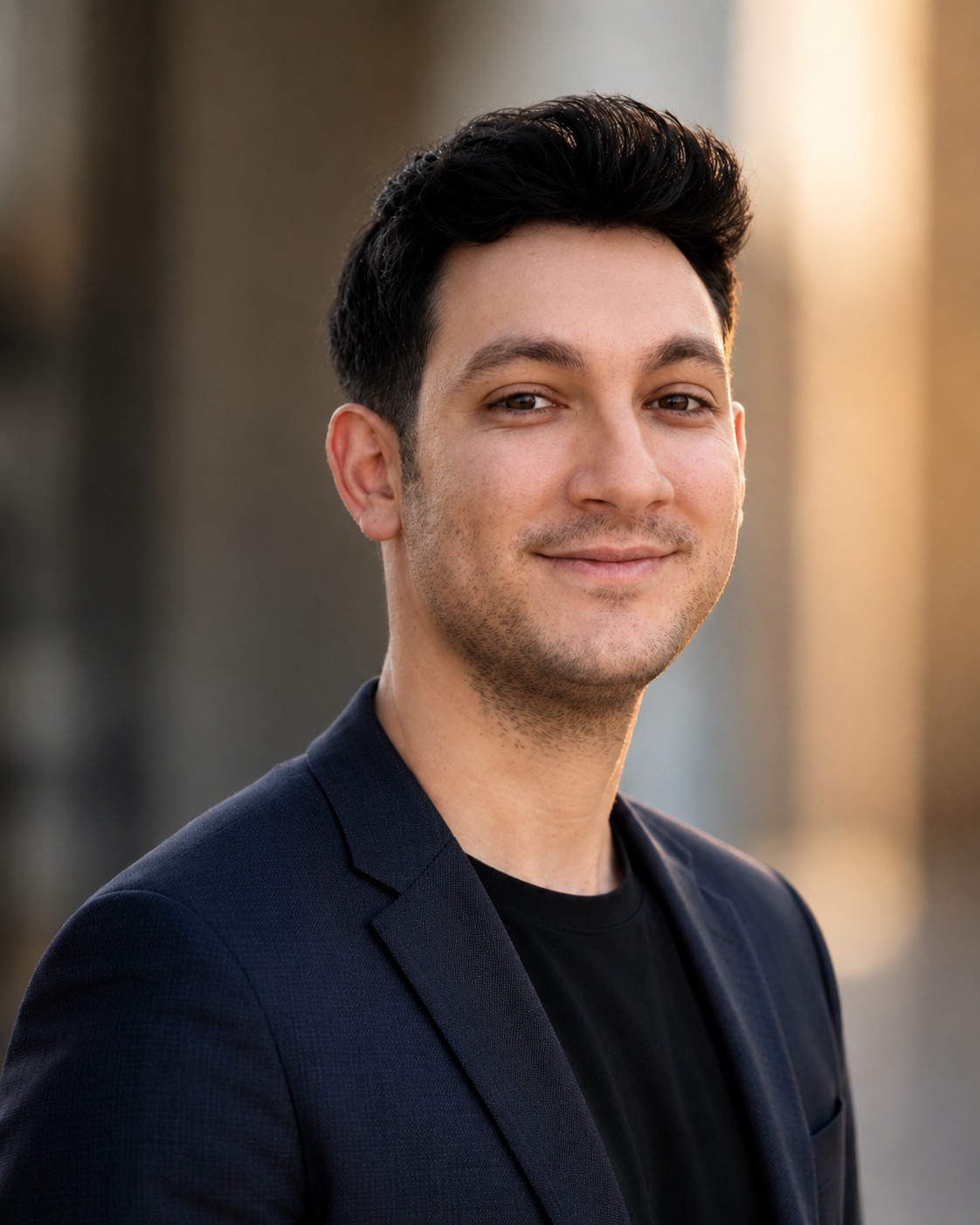 Federico Masiero
Technical University of Munich
His research focuses on wearable robotics, physical human-robot interaction (pHRI), and using soft
magnetic sensors to transduce human motion.
Federico Masiero
Technical University of Munich
His research focuses on wearable robotics, physical human-robot interaction (pHRI), and using soft
magnetic sensors to transduce human motion.
 Manolo Garabini
Università di Pisa
His research centers on the design, planning, and control of soft adaptive robots, variable stiffness
actuators, and collaborative humanoid joints.
Manolo Garabini
Università di Pisa
His research centers on the design, planning, and control of soft adaptive robots, variable stiffness
actuators, and collaborative humanoid joints.
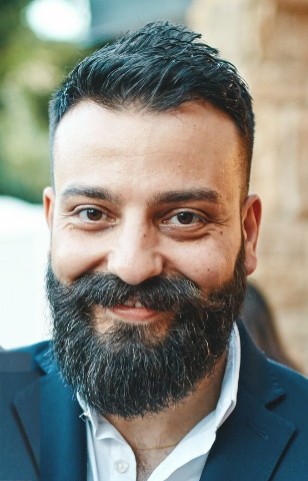 Matteo Saveriano
Università di Trento
His research integrates cognitive robots into factories and social environments, focusing on safe
human-robot interaction and learning from demonstration.
Matteo Saveriano
Università di Trento
His research integrates cognitive robots into factories and social environments, focusing on safe
human-robot interaction and learning from demonstration.
 Robin Kirschner
Technical University of Munich
Her research focuses on physical and cognitive safety in human-robot collaboration, centering on injury
modeling, safety perception, and control strategies for safe interaction.
Robin Kirschner
Technical University of Munich
Her research focuses on physical and cognitive safety in human-robot collaboration, centering on injury
modeling, safety perception, and control strategies for safe interaction.
 Matteo Russo
Università di Roma Tor Vergata
His research involves the design and modeling of continuum and soft robots for minimally invasive
surgery and high-performance mechanism optimization.
Matteo Russo
Università di Roma Tor Vergata
His research involves the design and modeling of continuum and soft robots for minimally invasive
surgery and high-performance mechanism optimization.
 Maja Trumić
Delft University of Technology
Her research centers on control systems for articulated soft robots, variable stiffness actuators, and
nonlinear adaptive control theory.
Maja Trumić
Delft University of Technology
Her research centers on control systems for articulated soft robots, variable stiffness actuators, and
nonlinear adaptive control theory.
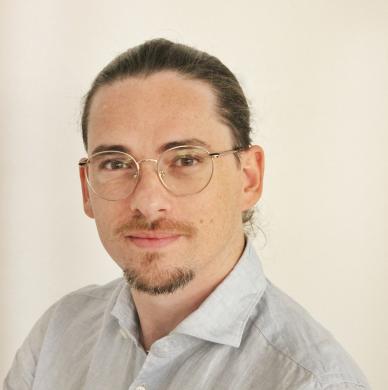 Emilio Trigili
Scuola Superiore Sant'Anna
His research is centered on wearable and rehabilitation robotics, specializing in exoskeleton design,
control, and human intention-decoding.
Emilio Trigili
Scuola Superiore Sant'Anna
His research is centered on wearable and rehabilitation robotics, specializing in exoskeleton design,
control, and human intention-decoding.
 Federico Tessari
Massachusetts Institute of Technology
His research bridges rehabilitation robotics and motor neuroscience, investigating human motor
coordination and custom electro-hydrostatic actuating units.
Federico Tessari
Massachusetts Institute of Technology
His research bridges rehabilitation robotics and motor neuroscience, investigating human motor
coordination and custom electro-hydrostatic actuating units.
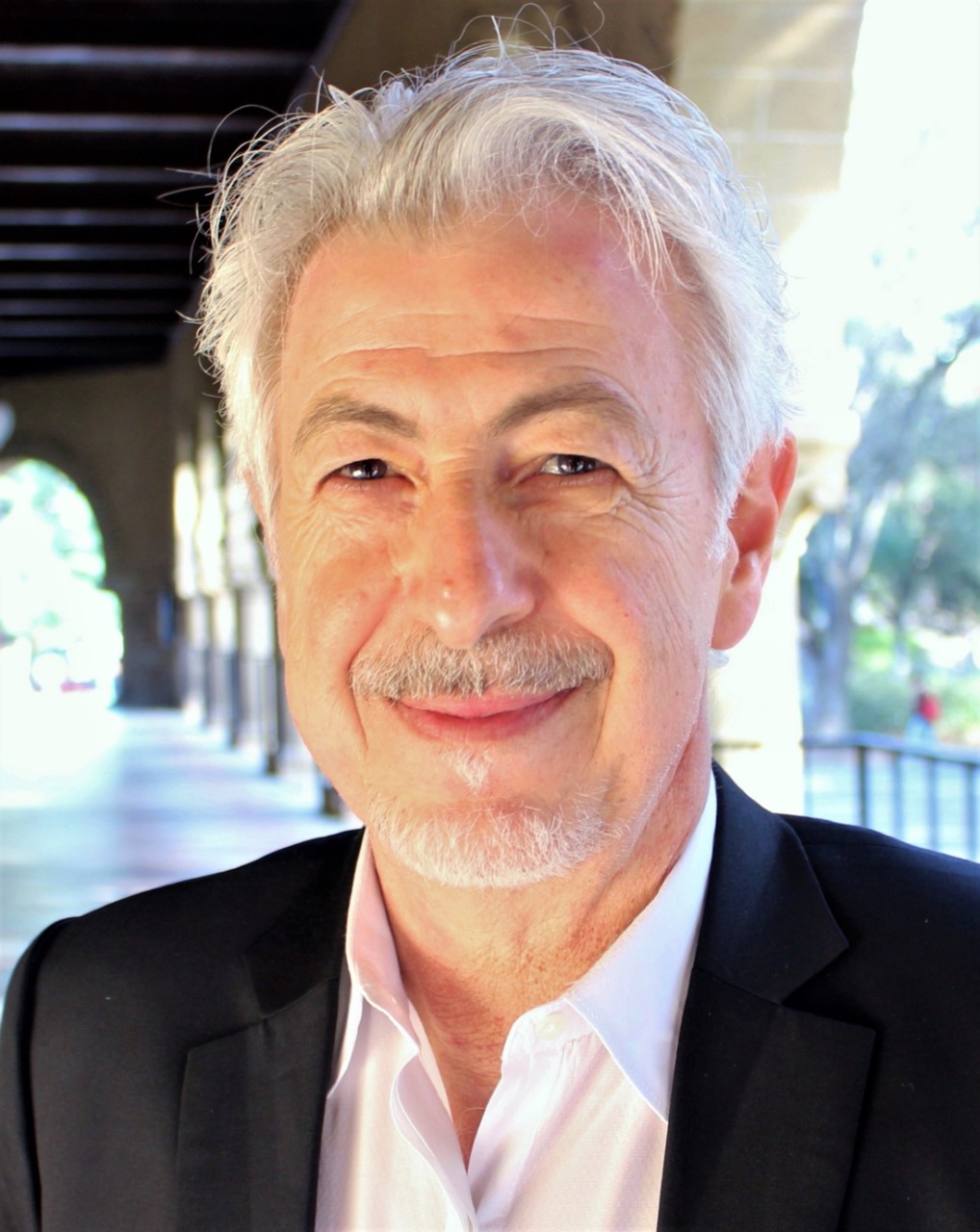 Oussama Khatib
Stanford University
Roundtable Act I Panelist
A pioneer in robotics, he will join us as a Special Guest participating in the Act I Roundtable panel.
Oussama Khatib
Stanford University
Roundtable Act I Panelist
A pioneer in robotics, he will join us as a Special Guest participating in the Act I Roundtable panel.